
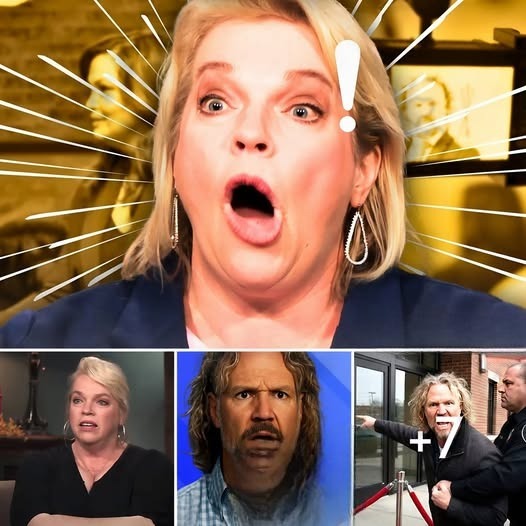
The shocking truth behind Janelle Brown’s stolen wedding footage will leave you speechless! 😱
In the ever-evolving world of reality television, where authenticity is often carefully manufactured rather than naturally captured, a major behind-the-scenes shift was quietly taking shape—one that would redefine how a deeply personal story was told. At the center of this transformation stood Janelle Brown, whose private wedding celebration unexpectedly became the focal point of a bold production experiment. What began as a logistical problem for the network soon turned into a calculated storytelling opportunity that would shake up the entire franchise.
Producers had originally planned a traditional televised special, complete with staged interviews, controlled lighting, and carefully constructed narrative beats. But they quickly ran into an unavoidable obstacle: Janelle’s wedding had already happened privately, away from cameras, and she had no intention of recreating such an intimate milestone for the sake of filming. That refusal forced the production team into unfamiliar territory. They could no longer shape events in real time, nor could they reshoot or recreate the emotional authenticity they had missed. Instead of resisting this limitation, however, they began to see potential in it.
The turning point came when executives realized they could reframe the absence of official filming as the very heart of the story. Rather than treating it as a loss, they positioned it as a narrative advantage. The idea was simple but disruptive: if they couldn’t film the wedding in a conventional way, they would embrace what already existed—raw, unpolished footage captured by family members and guests on phones. This shift marked the beginning of what insiders began calling the “freedom wedding” concept.
At the same time, the emotional center of the story—Kody Brown—was expected to become an unwilling participant in the unfolding drama. Producers understood that every element of this restructured special would inevitably contrast Janelle’s new life with the remnants of her former relationship. His reactions, whether restrained, defensive, or visibly uncomfortable, were anticipated to become a major talking point for audiences once the special aired.
Internally, the production strategy was reimagined as a hybrid between documentary and reality television commentary. Instead of polished wedding cinematography, viewers would be shown shaky phone recordings: wind-blown beach scenes, spontaneous laughter, and candid celebrations that felt unfiltered and immediate. These weren’t just aesthetic choices—they were deliberate signals that the show was stepping away from its highly produced roots.
Marketing teams quickly leaned into this direction. Promotional material reportedly included dramatic black screens, ambient ocean sounds, and sudden bursts of handheld footage. The messaging emphasized secrecy and surprise, framing the wedding as something that happened outside the traditional television system. Taglines hinted at a celebration “no cameras were invited to,” transforming absence into intrigue.
What made this approach particularly powerful was its alignment with shifting audience expectations. Viewers had become increasingly skeptical of overly scripted reality programming. Carefully staged ceremonies, repeated takes, and polished confessionals no longer carried the same emotional weight they once did. Instead, audiences gravitated toward imperfection—moments that felt accidental, spontaneous, and emotionally unfiltered. The production team recognized this cultural shift and deliberately leaned into it.
By licensing personal recordings from attendees, the network effectively blurred the line between private memory and public entertainment. Footage of dancing, toasts, laughter, and quiet exchanges became the foundation of the special. Even blurry or poorly lit clips were considered valuable because they reinforced the feeling of authenticity. The result was a viewing experience designed to feel invasive in the most compelling way—like stepping into a moment that was never meant to be broadcast.
But the creative strategy didn’t stop there. One of the most provocative elements involved planned reaction segments. In these scenes, cast members would be shown the wedding footage for the first time while being filmed themselves. This setup was designed to amplify emotional contrast. Viewers would watch Kody and his current partner seated in familiar surroundings, reacting in real time as clips of Janelle’s new life played out on screen.
The emotional tension of these segments was expected to drive much of the special’s impact. Kody, bound by contractual obligations, would not be able to avoid participating. His responses—whether restrained silence, sarcastic commentary, or visible discomfort—would become part of the narrative fabric. Producers anticipated that these reactions would spread quickly online, fueling discussion and debate far beyond the broadcast itself.

In contrast, Janelle’s segments were planned as calm, reflective confessionals. Filmed in peaceful environments, her interviews would focus on emotional clarity and personal freedom. She would speak about feeling unburdened, heard, and finally able to breathe without tension. The editorial structure would place her serenity against the emotional friction of her former partner’s reactions, creating a stark and intentional juxtaposition.
Financially, the production approach also carried significant implications. By treating the personal footage as licensed material, payments were directed to Janelle and, by extension, her children. This arrangement effectively separated the earnings from any previous family financial structures. It reinforced the idea that this was no longer a shared narrative controlled by a single household dynamic, but an independent project owned by those who contributed to its creation.
This shift reflected a broader transformation within the franchise itself. The original concept of a single central figure with multiple relationships was increasingly viewed as outdated. The storytelling focus was gradually moving toward individual journeys—particularly those of the women who were redefining their lives after separation. Janelle’s special became a symbolic example of this transition.
Her personal arc added emotional depth to the production’s evolution. Early in the series, she was often portrayed as the pragmatic stabilizer—someone who managed logistics, mediated conflict, and attempted to maintain balance within a complicated family structure. She believed in compromise and invested heavily in the idea that unity could be sustained through effort and patience.
Over time, however, that belief was tested. The emotional and structural imbalance within the relationship became increasingly difficult to ignore. Janelle eventually recognized that stability built on self-sacrifice was not sustainable. Her decision to step away was not abrupt but the result of prolonged reflection and emotional recalibration. By the time of her secret wedding in Hawaii, she had already undergone a significant internal transformation.
That ceremony, though private, symbolized more than just a personal milestone. It represented a complete redefinition of identity. Freed from her previous role, she embraced a life shaped by her own preferences—whether in lifestyle choices, personal expression, or emotional boundaries. The production framed this as a moment of reclamation rather than departure.
Speculation naturally followed regarding potential backlash or legal complications from the former family structure. However, insiders suggested that careful agreements and the strategic use of independently licensed footage made serious disputes unlikely. The narrative, as constructed, was designed to be both emotionally compelling and legally insulated.

As anticipation built for the release of the special, attention shifted toward audience reaction. Viewers were expected to scrutinize every detail—from facial expressions during reaction segments to the symbolism of the wedding footage itself. Online discourse would likely dissect the emotional dynamics frame by frame, turning the broadcast into a cultural talking point.
Ultimately, the project represented more than just a televised wedding special. It marked a reinvention of how personal stories could be told within reality television. What began as a production challenge became an opportunity to redefine ownership, perspective, and emotional storytelling.
Janelle’s journey stood at the center of it all. Her transition from participant to independent figure symbolized a larger shift within the franchise—one where personal agency outweighed traditional narrative control. The wedding, the footage, and even the reactions were all part of a larger reconfiguration of power.
In the end, the story was no longer just about a marriage or a family dynamic. It was about autonomy, reinvention, and the ability to reclaim one’s narrative in a world where everything is usually edited, shaped, and controlled. The “freedom wedding” didn’t just change the storyline—it redefined who had the right to tell it.