

Exposed: Kody Caught On Camera Trying To Silence Mykelti Brown’s Leaked Truth! 🫣
For years, the world of Sister Wives survived on carefully polished narratives. Every emotional breakdown, every family dinner, every awkward confrontation was filtered through production, edited for television, and packaged into a version of reality that felt digestible. Viewers were told they were watching the complete truth about the Brown family, but beneath the surface of all those seasons was a far messier story—one that nobody inside the family seemed fully willing to tell.
Until Mykelti Brown started talking.
And now, according to explosive new claims circulating among fans, a shocking leaked recording may reveal just how desperate Kody Brown became when he realized his daughter was no longer willing to protect the family image. The alleged tape, whispered about across fan communities, supposedly captures tense moments between father and daughter as Mykelti refuses to stay quiet about what life inside the Brown household was really like. Whether every detail of the leak is confirmed or not, one thing has become impossible to ignore: Mykelti has emerged as one of the most unpredictable and dangerous voices connected to the family’s legacy.
Not because she screams the loudest.
Not because she hates her father the most.
But because she refuses to simplify the truth.
That has always made her different.
Among all eighteen Brown children, Mykelti stands apart for one reason above all others: she says the uncomfortable parts out loud. In a family where image management became second nature, honesty itself became rebellion. While many of her siblings speak carefully, choosing words that preserve relationships or avoid conflict, Mykelti often speaks with startling directness. She does not present herself as the perfect daughter, the perfect victim, or even the perfect survivor. Instead, she offers something much more unsettling—complexity.
And complexity is dangerous in a reality TV empire built on controlling narratives.
For years, fans divided the Brown family into simple categories. Kody was either a monster or misunderstood. Christine was either heroic or bitter. Robyn was either manipulative or unfairly blamed. The audience wanted clean answers and dramatic conclusions. But every time Mykelti opened her mouth in interviews, livestreams, or candid conversations, she shattered those neat little boxes.
She would praise her father one minute and criticize him the next.
She would fiercely defend Christine while also admitting the family system itself created emotional chaos for everyone involved.
She would describe moments of genuine love inside the household while acknowledging wounds that never fully healed.
That refusal to flatten reality into easy headlines frustrated viewers who wanted certainty. But it also made her one of the most believable members of the family.
Because real life rarely fits into clean narratives.
The rumored leaked tape supposedly exposes this tension more clearly than ever. According to online speculation, Kody became increasingly uncomfortable with how openly Mykelti discussed family dynamics once the cracks inside the plural marriage became impossible to hide. The more she talked, the harder it became for the family to maintain the polished mythology that had carried the show for nearly two decades.
And that mythology mattered.
The Brown family wasn’t just a family anymore—it was a brand. Their relationships, heartbreaks, and conflicts became entertainment. Every season depended on maintaining audience investment, which meant controlling how the story was told. Certain truths were softened. Certain conflicts were delayed. Certain emotions were carefully managed for cameras.
But Mykelti kept stepping outside the script.
She talked openly about growing up in a household stretched emotionally and financially across four wives and eighteen children. She discussed what it felt like competing for attention from a father who could be loving one moment and emotionally absent the next. She described the strange emotional math of plural marriage from the perspective of a child forced to navigate shifting loyalties, divided households, and uneven emotional support.
What made her comments so powerful was that they never sounded rehearsed.
She didn’t speak like someone trying to destroy her father.
She spoke like someone trying to understand him.
And that distinction changed everything.
One of the most talked-about moments in Mykelti’s public journey came during an interview where she was asked directly about her relationship with Kody. Fans expected the usual reality-TV answers: vague diplomacy, careful wording, or emotional condemnation. Instead, Mykelti delivered something far more unsettling.
She described a father who was both present and absent.
A man capable of deep affection and deep disappointment at the same time.
Someone who created cherished memories while also leaving emotional scars.
She refused to declare him purely good or purely evil.
That honesty stopped people in their tracks.
Because audiences are comfortable with villains. They are comfortable with heroes. What they struggle with are complicated human beings who exist somewhere in between. Mykelti forced viewers to confront the possibility that Kody Brown was neither the cartoon villain critics painted him to be nor the loving patriarch he tried to portray on television.
He was simply human.
Flawed. Contradictory. Sometimes caring. Sometimes selfish.
And according to speculation surrounding the alleged leaked footage, that nuanced honesty may have terrified him more than outright criticism ever could.
A direct attack can be dismissed.
Complex truth cannot.
The tape rumors suggest Kody attempted to pressure Mykelti into being more careful about what she shared publicly, especially as tensions within the family exploded during later seasons of Sister Wives. If true, it would reveal the very thing many longtime viewers have suspected for years—that preserving the family image often mattered as much as preserving the family itself.
That possibility changes how fans look back at the show.
Because suddenly, many moments that once seemed authentic begin to feel staged, or at least strategically incomplete. The smiling group photos. The forced celebrations. The carefully framed conversations about unity and faith. Behind all of it may have been children quietly carrying emotional realities too complicated for television.
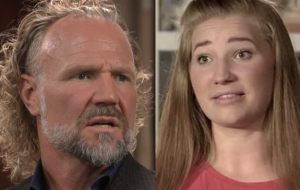
And Mykelti became one of the first willing to describe those realities honestly.
What makes her voice uniquely important is that she still maintains relationships across the family divide. Unlike some siblings who completely severed ties with Kody, Mykelti continues navigating an ongoing, complicated connection with him. That makes her perspective harder to dismiss because she isn’t speaking from pure estrangement or anger.
She still sees him.
Still talks to him.
Still wrestles with loving someone who also caused pain.
That emotional contradiction gives her credibility many reality TV personalities lack.
She is not trying to win a side.
She is trying to tell the truth as she experienced it.
And the truth, according to Mykelti, is uncomfortable for everyone.
She has spoken with admiration about Christine’s resilience, describing a mother who absorbed enormous emotional strain for decades while trying to hold the family together. But even those statements avoid simple hero worship. Mykelti’s respect for her mother feels grounded in observation, not blind loyalty. She speaks as someone old enough now to recognize sacrifices she couldn’t fully understand as a child.
At the same time, she refuses to erase the good memories connected to her father simply because audiences demand total condemnation.
That balancing act infuriates some viewers because it denies them emotional certainty.
But it also feels profoundly real.
Children of difficult families rarely experience their parents in absolutes. Love and disappointment often coexist. Warmth and neglect can exist side by side. Mykelti’s willingness to publicly hold both realities at once may be the most emotionally intelligent thing anyone in the Brown family has ever done.
And that may explain why the rumored tape has generated such fascination.
Because if Kody truly tried to silence her, it suggests he understood exactly how dangerous her honesty could become.
Not explosive honesty.
Not revenge-driven honesty.
But calm, sustained, undeniable honesty.
The kind that slowly dismantles carefully constructed illusions.
As the Brown family continues fracturing in public, each child appears to be responding differently to their unusual upbringing. Some remain mostly silent. Others speak cautiously. A few distance themselves entirely from the spotlight. But Mykelti keeps talking—not recklessly, but persistently.
She talks about identity.
About growing up inside a televised family.

About what it means to realize your childhood became entertainment for millions of strangers.
About trying to become your own person after spending years trapped inside a storyline designed by adults, producers, and audience expectations.
Those conversations may ultimately become more important than the show itself.
Because the real story of Sister Wives was never only about plural marriage. It was about the children raised inside that system and how they learned to survive it. The cameras captured family dinners and dramatic confrontations, but they could never fully capture what it felt like to grow up inside a household where every emotion might eventually become content.
Mykelti understands that now.
And she appears determined not to let the official narrative erase the emotional truth underneath it.
Today, Mykelti is building a life beyond the chaos. She is married to Tony Padron, raising children of her own, and trying to navigate adulthood with the complicated wisdom that comes from surviving an extraordinary upbringing. Her relationship with Kody remains imperfect but ongoing—a reality far messier than the dramatic cutoffs audiences often expect.
And perhaps that is the final twist in this entire story.
The real scandal isn’t simply the leaked tape.
It isn’t whether Kody was caught trying to manage the narrative.
It’s the realization that the Brown family story was always far more complicated than television allowed viewers to see.
Mykelti represents the collapse of the old illusion. She refuses to perform simplified emotions for audience comfort. She refuses to reduce people into caricatures. She refuses to pretend complicated pain can be solved with a single confrontation or a viral soundbite.
That refusal makes her frustrating.
It also makes her essential.
Because long after the cameras stop rolling, long after the producers disappear and the seasons end, the most important story will belong to the children who actually lived through it.
And Mykelti Brown may be the one finally brave enough to tell it exactly as it was.