
DAYS’ Johnny Won’t Change DiMera—But DiMera Will Change Him. Now that Johnny’s remaining CEO of DiMera, he’s ready to change his family company for the better…or so he thinks. 👀 Here’s how Johnny may be about to get pulled under the DiMera tidal wave on DAYS. 🌊
Johnny walked into DiMera Enterprises on Days of our Lives with something dangerously rare for that house: permission and a conscience. Chanel gave him her blessing to stay on as CEO after Theo stepped down, with one very reasonable condition: keep it clean. No illegal moves. No immoral shortcuts. No damage to the family. Johnny agreed like a man who still believes rules mean something in a place that built its reputation by breaking them. But Salem has a long memory, and DiMera isn’t just a company. It’s a gravity well. The question isn’t whether Johnny can change it. It’s how long before it starts changing him.
The Rules Won’t Survive First Contact
Johnny’s “no illegal or immoral behavior” policy sounds great in a boardroom. It sounds even better when you say it out loud to someone you love. It just doesn’t sound like DiMera’s mission statement, or something that a DiMera family member would say.
This is a legacy built on kidnapping, brainwashing, gas leaks, and the occasional light organ theft. You don’t walk into that and install a code of ethics like you’re updating office Wi-Fi. At best, a DiMera nods politely, waits for you to finish, and then quietly locks you in a room with your own good intentions until they start negotiating.
At some point, Johnny’s going to hit a wall where doing the right thing costs him everything. And that’s when DiMera stops being a job and starts being a test he didn’t study for. And DiMera doesn’t grade on a curve… it hands you the answer key, dares you to use it, and then judges you for how quickly you do. (How could Kristen (Stacy Haiduk) be using Johnny?)
Power Doesn’t Ask, It Rewrites
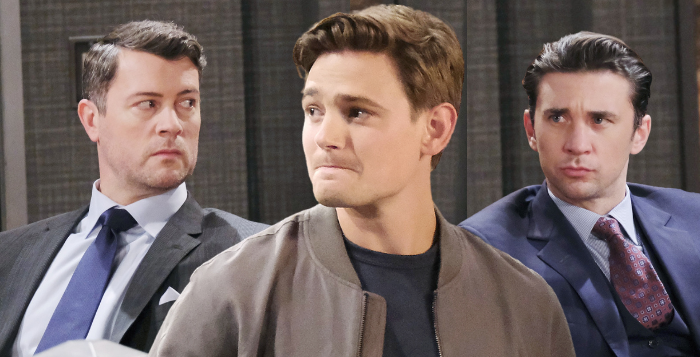
The unsettling part isn’t that Johnny might bend the rules. It’s how easy it could feel when he does. Not dramatic. Not evil laughter in the mirror, or mustache twirling. Just one decision that makes sense in the moment.
Maybe it’s withholding information “for protection.” Maybe it’s making a deal he doesn’t fully explain. Maybe it’s letting something slide because the alternative is worse. That’s how it starts. Not with a villain speech, but with a justification.
And the longer he stays in that chair, the more those justifications stack. Because DiMera power doesn’t demand loyalty. It rewrites instincts. By the time Johnny realizes he’s crossed a line, it won’t look like a line anymore. It’ll look like the only move he has left.
Johnny may have walked into DiMera Enterprises believing he could lead differently, but Salem has never been kind to idealists. Especially DiMera idealists. The family business has destroyed stronger people than him, and the truly dangerous thing is that it rarely happens all at once. DiMera corruption isn’t explosive. It’s gradual. It seeps into people quietly, convincing them that survival matters more than principle until one day they wake up defending the very things they once hated.
Right now, Johnny still thinks he can separate himself from the family legacy. He thinks he can sit in that office, sign those contracts, manage those power struggles, and somehow remain untouched. But the building itself practically breathes manipulation. Every hallway carries ghosts of deals made in secret, betrayals disguised as strategy, and moral lines erased for convenience. Nobody survives there by staying innocent forever.
And the worst part? Johnny probably won’t even notice the moment things begin to change.
At first, it will feel harmless. Small compromises always do. Maybe an employee needs to disappear quietly before damaging the company. Maybe evidence has to be hidden temporarily “until the timing is right.” Maybe a rival needs pressure applied behind the scenes. None of it will seem unforgivable in the moment because Salem has a way of making bad behavior sound practical.
That’s how DiMera thinking works.
Nobody inside that empire wakes up saying they want to become cruel. They convince themselves they’re protecting family. Protecting legacy. Protecting the people they love. Stefano built the entire DiMera dynasty on that logic, and generations after him inherited the same poison disguised as loyalty.
Johnny grew up hearing stories about the family’s power, but hearing about it and controlling it are completely different experiences. Once someone sits in the CEO chair, they stop seeing problems the way ordinary people do. Suddenly every situation becomes strategic. Every relationship becomes leverage. Every secret becomes currency.
And Johnny is dangerously unprepared for how addictive that control can become.
Because power inside DiMera Enterprises doesn’t just give people authority. It gives them options they never had before. The ability to erase problems. Manipulate outcomes. Influence lives. For someone trying desperately to prove himself worthy of the family name while simultaneously rejecting its darkness, that temptation becomes almost impossible to resist.
Especially when pressure starts coming from every direction.
Chanel may trust Johnny now, but trust in Salem is fragile. The moment his choices begin affecting their marriage, things could unravel fast. She asked him for one simple promise: stay moral. Stay clean. But what happens when doing that threatens everything they’ve built together? What happens when protecting Chanel requires Johnny to make one unethical decision?
Because Salem always creates situations where morality becomes inconvenient.
And there are already dangerous people circling around him waiting for exactly that weakness to appear.
Kristen is perhaps the biggest threat of all because she understands DiMera instincts better than anyone. She knows how to identify insecurity. She knows how to weaponize fear. And she absolutely knows how to manipulate family loyalty. If Johnny starts doubting himself even slightly, Kristen will exploit it immediately.
She won’t push him toward darkness all at once. That would never work. Instead, she’ll frame every questionable action as necessary. Reasonable. Temporary. She’ll make him believe he’s still one of the good guys even while crossing lines he once swore he never would.
That’s the terrifying thing about DiMera corruption. It rarely feels evil while it’s happening.
Even EJ, Johnny’s own father, could become part of the problem. EJ understands better than anyone that morality and business power rarely coexist peacefully in Salem. Deep down, he may even see Johnny’s idealism as naïve. A weakness. Something that eventually has to be broken if Johnny truly wants to survive as a DiMera leader.
And if EJ begins subtly guiding him toward more ruthless decisions, Johnny may listen more than he realizes.
Because despite everything, Johnny still wants approval.
That emotional need could become his downfall.
For years, Johnny has tried to define himself separately from his family’s darker reputation. But taking over DiMera Enterprises changes the entire equation. Now he’s no longer standing outside the legacy criticizing it. He’s inside it. Responsible for maintaining it. Carrying it. Defending it.
That kind of pressure changes people.
The most heartbreaking possibility is that Johnny could genuinely believe he’s making things better while slowly becoming exactly what he once feared. Every compromise will come wrapped in justification. Every secret will feel necessary. Every manipulation will appear temporary. Until eventually the person looking back in the mirror starts resembling the DiMeras he promised never to imitate.
And by then, it may be too late.
Because Salem rarely rewards restraint.
In fact, restraint often gets punished there. Characters who hesitate lose power. Characters who follow rules get outplayed. Johnny is entering a world where mercy is seen as weakness and hesitation becomes vulnerability. If he refuses to adapt, he risks losing everything. But if he adapts too much, he risks losing himself.
That internal conflict could become one of the strongest psychological stories the show has explored in years.
Viewers are already watching for signs of change. The moment Johnny starts hiding information from Chanel, fans will notice. The moment he begins defending morally gray choices, alarms will start going off. And the truly tragic part is that he may still believe he’s protecting the people he loves while doing it.
That’s exactly how Salem villains are born.
Not through dramatic transformations overnight, but through gradual emotional erosion.
One impossible decision at a time.
And if the writers fully commit to this storyline, Johnny’s future could become devastatingly complex. Imagine Chanel realizing the man she trusted is starting to sound more like EJ. Imagine Marlena recognizing subtle behavioral changes before Johnny himself does. Imagine Johnny reaching a point where he can no longer tell the difference between protecting his family and controlling them.
That’s where this story becomes truly dangerous.
Because once DiMera power rewrites someone’s instincts, reversing the damage becomes nearly impossible.
The company doesn’t merely corrupt people. It isolates them. It teaches them to rely on secrecy. To distrust vulnerability. To believe emotional honesty creates weakness. Slowly, relationships begin breaking under the weight of hidden agendas and half-truths.
And Johnny could be heading straight toward that trap.
Right now, he still has a chance to walk away before the transformation becomes permanent. But pride may stop him from doing it. Walking away would feel like failure. Admitting he can’t handle DiMera power would crush the image he has of himself.
So instead, he may stay.
And the longer he stays, the more Salem will test him.
Eventually there will come a moment where Johnny must choose between his conscience and his survival inside the DiMera empire. That moment is inevitable. The only real mystery is what version of Johnny will still exist when it arrives.
Because DiMera Enterprises has consumed generations before him.
And it may already be consuming him too.